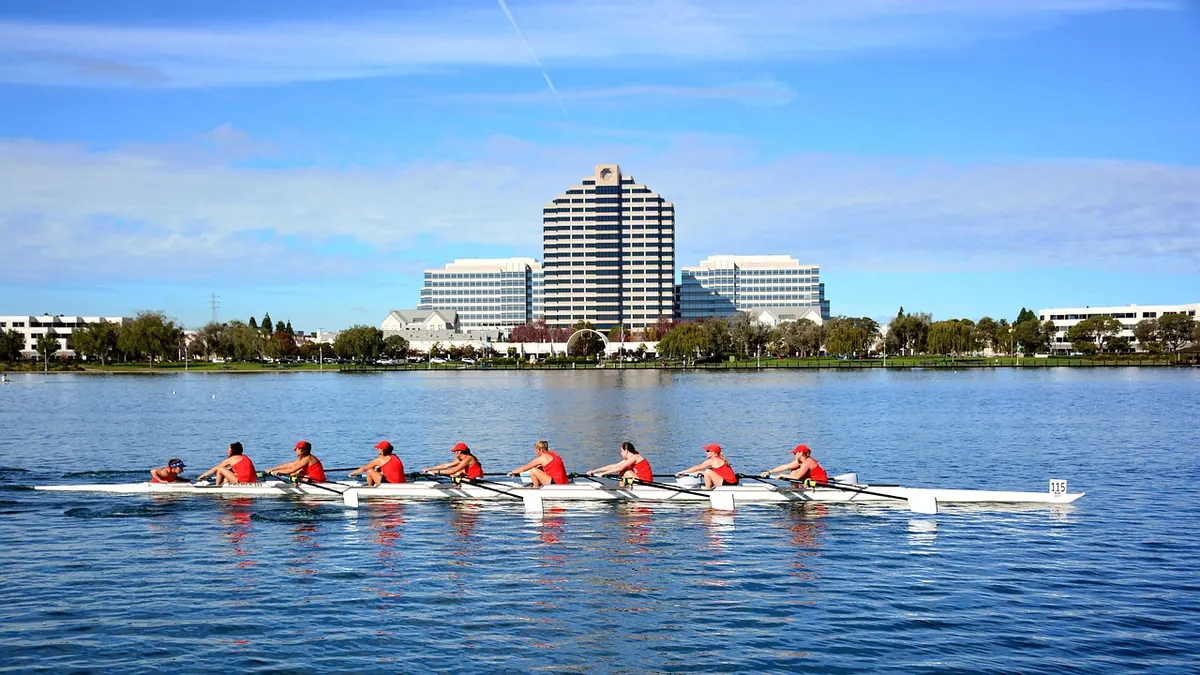
Two boats sit on the rack. One is a single scull, narrow enough that you wonder how anyone stays in it, with two slim oars lying across the gunwales. The other is an eight: a long shell with eight sweep oars and a seat at the stern for a coxswain. Both are rowing. Both will make you fit and humble you on a windy day. But the way you hold the oars, balance the hull and share the work is different enough that most beginners end up choosing a side. Here's what actually separates the two, and how to pick the one to learn first.
In sweep rowing, each person holds a single oar with both hands. If you sit on the port side, your oar is on your left; starboard, on your right. The oar is long — noticeably longer than a scull — and you grip it with your outside hand on the very end of the handle and your inside hand just inside it. The two hands have separate jobs: one rolls the handle to feather the blade, the other steadies it and controls the height. Coaches spend a beginner's first sessions on exactly that.
The defining feature of sweep is that you cannot balance the boat alone. Half the crew pulls on one side, half on the other, and the shell sits level only when everyone hangs together. If one rower drops their hands or rushes the slide, the whole boat tips. That's the appeal and the frustration: an eight can feel wonderfully stable, then lurch like a see-saw the moment two people stop matching.
Sweep boats include the pair (two rowers, no cox), the coxed pair, the four, and the eight. The coxless pair is often described as the hardest boat in the shed — two people, no coxswain, nowhere to hide.
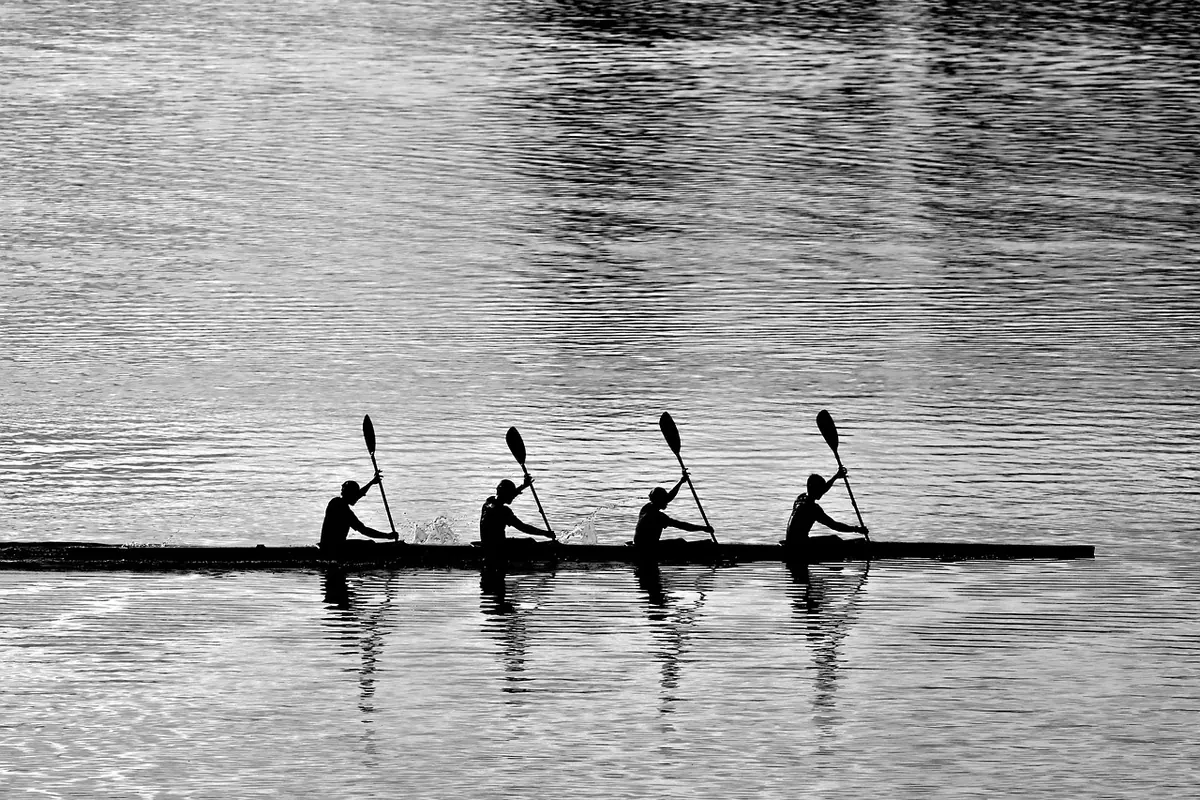
Sculling means one oar in each hand, so you are your own counterbalance. That single fact changes everything. There is no teammate to keep you upright, no coxswain to steer, and no one to blame when the boat goes over. The sculling oars are shorter, and each hand rolls its own blade separately — two wrists doing independent work rather than one handle shared between two hands.
Then there is the small matter of your hands meeting in front of your chest at the finish, with one handle stacked above the other, before they pass back out to the sides on the recovery. Rowers who are perfectly competent in an eight sometimes find this genuinely awkward for a week or two. Sculling boats run from the single, through the double, the quad, and up to the octuple — rare outside junior and club racing. The single is the purest version of the sport: no crew, no excuses, and no one else to blame for your balance.
If you want to row in college crew or at a big club, you'll almost certainly be in sweep boats. If you want to row alone whenever it suits you, at whatever time of day, you want a single.
A racing single is narrow — narrow enough that sitting still feels like a party trick. Nearly everyone capsizes in their first few outings, and clubs plan for it: they scull in shallow water, in summer, with a coach nearby. The trade-off is that a single teaches you boat feel faster than anything else, because there is no crew to mask your mistakes.
Sweep is more forgiving at the start, especially in an eight, where the hull is broad and seven other people are holding the boat up. The catch is that you can hide there. It's entirely possible to row for months in a crew boat and still not know what a clean catch feels like, because the person in front of you is doing the work of setting the rhythm and you're following along.
Whichever you choose, dress for the water, not the air. Cold water is the real risk in rowing, and local rules on buoyancy aids, capsize drills and swimming ability exist for good reason. Follow them.
The common coaching argument runs like this: learn to scull first if you can. Two oars force you to feel the blade in the water, to balance your own hull, and to steer. Those skills transfer directly to sweep, where you suddenly have a much easier job — one blade, one side, and a crew around you. Going the other way is not impossible, but rowers who learn sweep first often arrive in a single with strong pulling habits and very little balance.
That said, plenty of excellent rowers started in an eight at a club with no singles to spare. There are real reasons to learn sweep first.
More than you'd expect, and less than you'd hope. The drive sequence — legs, then body, then arms — is identical. So is the rhythm of the recovery, the importance of a relaxed grip, and the sense of hanging your weight on the handle rather than yanking with your arms. Clean blade depth, a quick tap-down and a patient slide are the same skills in both.
Hand coordination does not transfer. Moving from scull to sweep, you'll spend a session or two confused about what to do with your inside hand. Moving from sweep to scull, you'll have the blade work but your balance will be a beginner's again. Most rowers who stick with the sport end up doing both, and it sharpens each one.
The honest answer is that the best style to learn first is the one your club can teach you safely, with a coach watching and water you can fall into without drama. Everything else — the boat, the blades, the side you sit on — can be learned later. Nearly every rower ends up trying both eventually, and almost nobody regrets starting with either.
Photo: ÖMER ŞAHİN / Pexels